Center-left opposition parties in Lithuania celebrated their victory on Monday after defeating the center-right coalition that governs the country in the latest round of national elections. With 100% of the votes counted after Sunday’s poll, the Social Democrats secured 52 parliamentary seats in the 141-seat chamber, the Seimas, and ended four years of government by the National Union led by conservative Prime Minister Ingrida Šimonytė.
The result came as a surprise to the governing conservatives, who expected to secure only two fewer seats than the Social Democrats. Analysts had estimated that Lithuania would continue its historical pattern, where voters tend to switch positions every four years. Šimonytė acknowledged the defeat and referred to these precedents.
The Social Democratic Party will begin negotiations to form a government with two smaller center-left parties, the Democratic Union and the Union of Peasants and Greens, which won 14 and 8 seats respectively. This means a government can be formed without the populist Nemuno Aušra, which came in third with 20 seats, and the coalition is expected to control at least 74 seats.
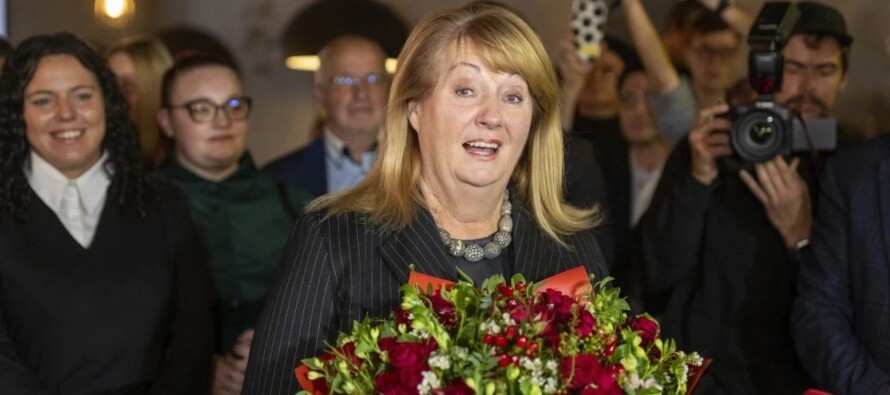
Vilija Blinkėvičiūtė, leader of the Social Democrats, thanked her supporters as a crowd celebrated and cheered in the center of Vilnius on Sunday. "I am very grateful to the people of Lithuania who were so active today voting for us," she said. "We respect the will of the voters."
The elections took place as Russia's war in Ukraine heightened fears about Moscow's intentions, especially in the strategic Baltic region. Analysts did not expect significant changes in Lithuania's foreign policy. The leader of the National Union, Remigijus Žemaitaitis, had to resign from Parliament this year for making anti-Semitic statements.
After learning the results, Gabrielius Landsbergis, Minister of Foreign Affairs, announced his resignation as leader of the National Union and said he was leaving politics. Voter turnout on Sunday was 41.31%, one of the highest in a second round in the country.
Some criticisms of the outgoing government included strict measures during the pandemic and a lack of economic support for businesses during the lockdown. Šimonytė was criticized for her handling of the arrival of migrants from Belarus, although Lithuania is a staunch supporter of Ukraine in the European Union and NATO.